The Pre-Season Habits That Make Hunting Days Run More Smoothly: Where Good Preparation Starts
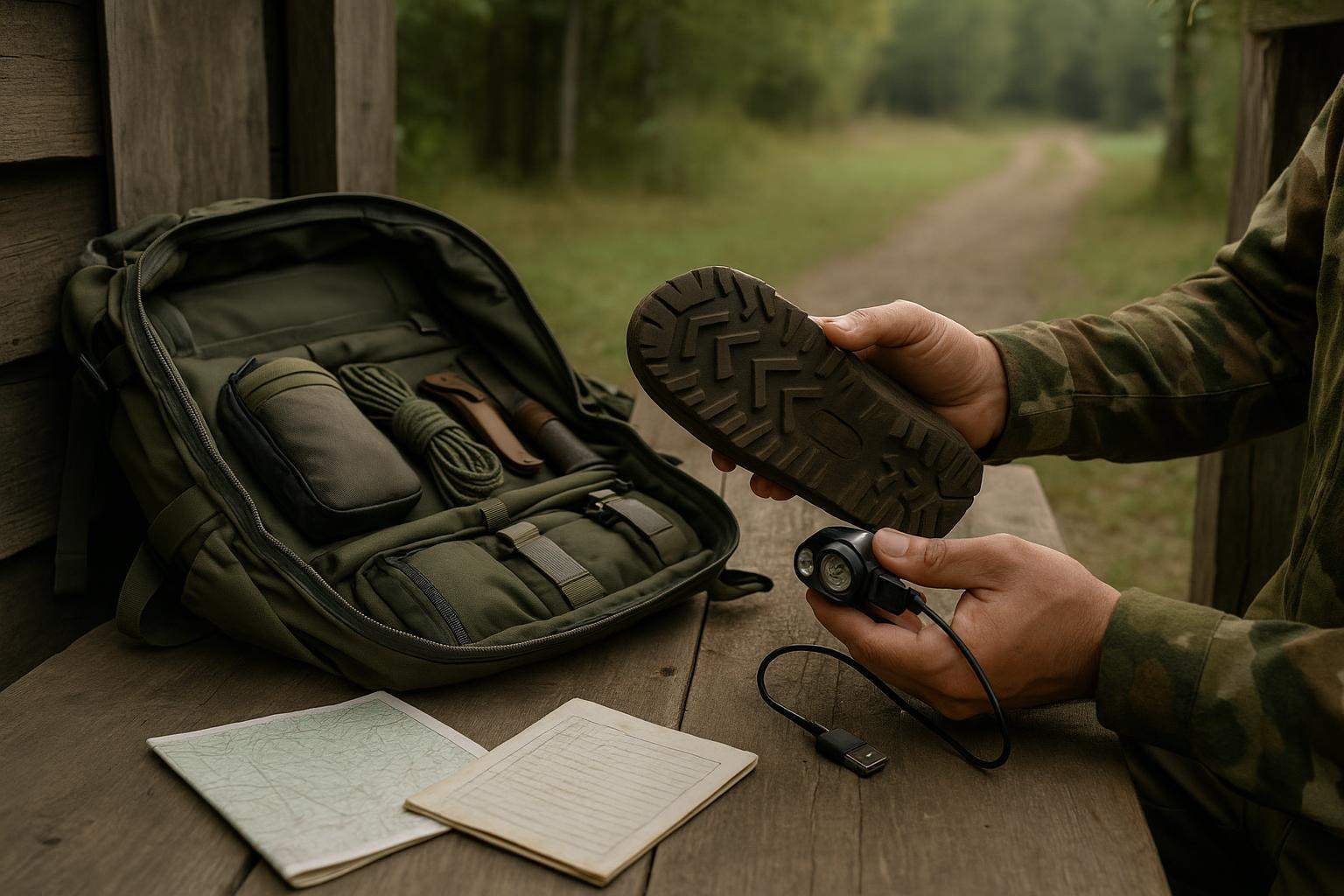
Good hunting preparation is not about owning more equipment or memorizing a longer gear list. Opening day should not be the first meaningful test. Small problems may have been visible for weeks: a stiff boot, weak headlamp, outdated permit or unchecked route. Starting early gives you time to fix problems and change plans when something should not be ignored. The result is a safer, more ethical day with fewer rushed decisions.
Begin with problems that reveal themselves early
Use ordinary outings to inspect items that can fail quietly. Wear hunting boots on uneven ground and watch for heel movement, hot spots, separated soles or dampness that remains after drying. Minor irritation can become a serious distraction after hours outside. A cracked sole or leaking seam requires replacement, not a field repair.
Check packs, straps, rain layers and gloves for torn stitching, damaged buckles and clogged closures. Open every pocket, including those used rarely. If a zipper repeatedly catches or a buckle releases under light pressure, do not assume it will perform better under strain.
Apply the same approach to navigation and communication equipment. Charge devices, inspect cables, replace weak batteries and confirm maps are available in the form you expect to use. Test a flashlight in darkness. A dim beam, intermittent switch or missing spare power source is a warning, not a minor inconvenience.
Let a simple checklist expose gaps
A useful pre-season hunting checklist should be short enough to use and specific enough to prompt a decision:
– Permission and information: Confirm the current license, tags, season dates, legal methods, access permission and reporting steps.
– Route and conditions: Review the access point, parking limits, terrain, forecast, daylight, water sources and a backup exit.
– Personal readiness: Check footwear, clothing layers, food, water, first-aid supplies, medications and emergency contacts.
– Core equipment: Inspect navigation tools, light, pack, optics, field tools and communication devices.
– Safety plan: Tell someone where you are going, when you expect to return and what to do if plans change.
Do not let the list become a ritual. If an item creates uncertainty, stop and resolve it. "I think it is allowed" is not a legal check, and "the battery was fine last year" is not an equipment check.
Verify regulations before the plan is fixed
Regulations can change by jurisdiction, species, season, unit, method and access area. A familiar location does not guarantee familiar rules. Check current information from the relevant wildlife agency, land manager or other official authority before setting the date and method, then carry required documents in a usable form.
Review equipment restrictions, tagging and transport requirements, blaze or visibility rules, legal shooting hours, reporting duties and public-private boundaries. Older notes, remembered advice and last season's screenshots are leads, not proof.
If rules are unclear, access permission is undocumented or a boundary cannot be identified confidently, change the plan until the uncertainty is resolved. A delayed outing is preferable to a preventable violation or a shot taken in the wrong place.
Treat gear maintenance as a safety check
Maintenance is not limited to cleaning after a trip. Look for corrosion, frayed cord, loose hardware, delaminated waterproof fabric, distorted cases or a fuel container that smells unusual. Clean equipment according to the manufacturer's instructions, dry it fully before storage and keep incompatible chemicals away from technical fabrics and optics.
For firearms and other hunting equipment, follow the manufacturer's safety and maintenance guidance. Use qualified service support when a problem exceeds a routine inspection, and do not improvise modifications to solve reliability issues. A loose, damaged or inconsistent component deserves attention before the season, not a field test.
Store equipment away from heat, moisture and pests. At the next inspection, look for mice, mold, battery leakage or compressed padding. Preventive work is easiest while the symptom is still small.
Build hunting safety into the route
A safety plan should account for the person you are likely to be, not a perfectly prepared version of yourself. Fatigue, cold, poor visibility, injury and a slower return can turn a reasonable route into a poor one. Choose turnaround points before leaving, identify where communication may fail and carry enough basic supplies to wait safely if travel stops.
Tell a reliable contact your destination, route, vehicle details and return expectation. Update that person when plans change. Keep essentials accessible rather than buried under gear, and do not rely on a phone as your only source of light, navigation or emergency communication.
Weather deserves a go-or-no-go decision, not just a glance at an icon. Strong wind, rising water, heat, ice or poor visibility can change animal movement and terrain risk at the same time. If conditions exceed your experience, equipment or recovery options, postpone the outing.
Make ethics and conservation part of preparation
Ethical hunting begins before an animal is located. Know the legal target, identify what lies beyond it and decide in advance what would make a shot unacceptable. Unclear distance, poor visibility, an unstable position or an obstructed background are reasons to wait or pass, not problems to solve through optimism.
Preparation also includes recovery planning. Consider terrain, distance, daylight, temperature and the people available to help before taking a difficult opportunity. If responsible recovery is unlikely, the opportunity is not responsible.
Follow access rules, avoid unnecessary disturbance, pack out waste, respect closed areas and leave gates, water sources and campsites as required. Report observations or concerns through appropriate local channels when asked, and avoid damaging vegetation, soil or nesting areas.
Smooth hunting days are built from modest habits: checking symptoms, confirming rules, maintaining equipment and being willing to change a plan. Preparation cannot guarantee perfect conditions, but it makes the right decision easier when conditions are imperfect.
